Why consider DTU? Rankings, innovations, and admission matters...
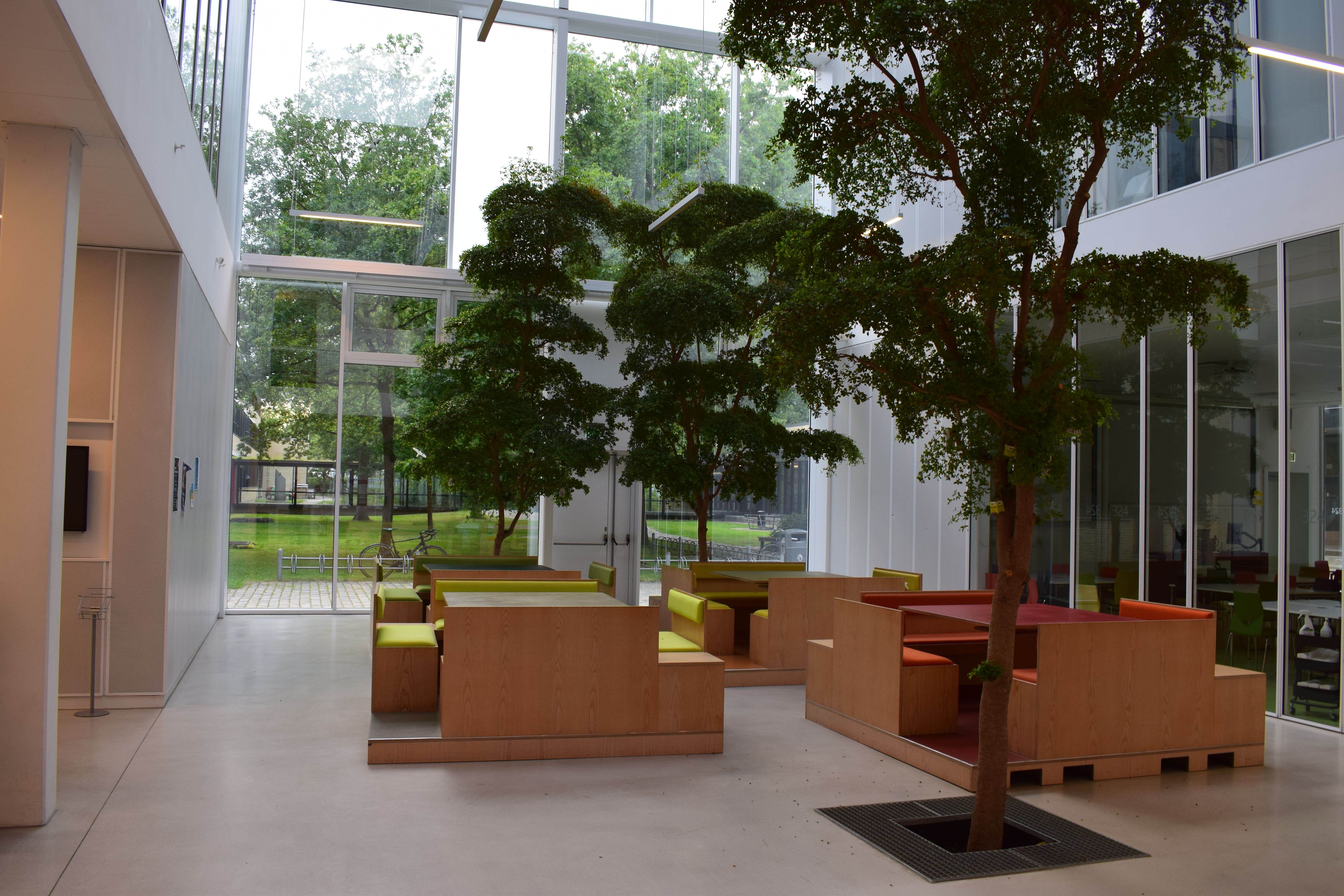
As promised in the previous post, today we’re getting down to the next topic. Now that you roughly know my concept for this project, it’s worth answering the question: why did I actually choose this place and how to (not) get surprised during the admission process.
Why DTU? Rankings and Giants
Let’s not hide it - DTU (Technical University of Denmark) is a very strong brand in the engineering world. This is confirmed by rankings updated every year. Below I’m throwing in a small breakdown - take a look at how the university performs on a global and European scale:
| Ranking | World / Europe | Field |
|---|---|---|
| QS World | Top 100 / Top 50 | Eng & Tech |
| Shanghai | #3 / #1 | Biotech |
| EngiRank | — / #1 | Eng (EU) |
(The data above is approximate and changes every year, but the trend is constant - it’s high!)
If any of you are interested in the economy or follow the stock market, you know that the Danish economy stands on the shoulders of giants like Novo Nordisk or Maersk. And this is not insignificant for students. This fact directly translates into the quality of education and research funding. The best programs are those related to chemistry, biology, and pharmacy (… the 3rd place globally in biotechnology in the Shanghai ranking didn’t come from nowhere).
DTU also offers a wide selection of other engineering programs (STEM). This shouldn’t surprise anybody - Denmark lies strategically between the Baltic and the North Sea, so the continuous development of maritime transport, logistics, or energy security is really a necessity here, not a choice.
Innovations… and a little “but”
However, there is one additional aspect that must be mentioned - the massive emphasis on innovation, ecology, and broadly understood sustainable development in general. These aren’t just catchphrases in a promotional brochure; you can actually see this in the core of every single study program you might be interested in.
For most programs, the only mandatory subjects (the so-called General Competence courses) are precisely those related to engineering innovation and sustainability. And here’s a little note from me:
Considering the course of these classes, you might get the impression (maybe I’ll come off as an ignorant person, oh well 🤷♂️) that they don’t always promote the best, winning technical solutions, but rather those that… best fit the key and the expectations of the Danes.
From my perspective, it’s quite a specific experience that you should be prepared for. Sometimes you just have to put your engineering ego in your pocket and simply follow the flow.
What does the admission process look like? (Status for 2026)
Here I have to put a big exclamation mark: the situation is very dynamic. A lot has changed over the last 2 years.
When I was applying for my program (let’s call it version 1.0), the system was quite rigid:
- You had to have specific courses already passed during your Bachelor’s (the so-called prerequisites).
- English proficiency at the C1 level was required (they accepted 3 different certificates (which will be mentioned below)).
- A minimum of 2 recommendation letters from professors or employers were necessary.
- The GPA had to be at least 75% of the maximum scale.
- A very important point here is the fact that not having completed your first-cycle studies doesn’t disqualify you from the admission process; if you are still struggling with your Bachelor’s or Engineering degree, there is simply an option to upload a transcript of grades you have at that specific moment to the system.
And how is it now?
Due to the higher education reform in Denmark, the rules of the game have evolved. From what I can see:
- Supplementary admission deadlines have been removed – this is a super important change! Don’t miss the main window, because there is no second chance in the same year anymore.
- An option to supplement your portfolio with a GRE test score has been added, which can save your skin if your GPA is borderline. Remember, however, that the first filter remains the GPA at around 75% and an appropriate number of ECTS credits from the required prerequisite courses.
- Achievements related to research activities are taken into account, as well as professional experience.
- Recommendation letters are only required when applying for 6 specific programs.
- A motivation letter is still crucial to stand out – and an important note: write it yourself, using AI can very easily disqualify you.
- The required English level is still C1, but the university can be ruthless towards international students: only CAE, CPE, IELTS, or TOEFL certificates are accepted. An International or European Baccalaureate will also be fine.
- All documents from foreign countries must strictly be translated by a professional translator (preferably into English or Danish).
Therefore, instead of writing you a “step-by-step” guide here that might be outdated in a month, I’m doing the safest thing you can do right now, which is sending you directly to the official documentation:
👉 ALWAYS check the details directly at the source: 1. Official DTU admission page 2. Required documents
That’s it for today! In the next post, we’re hitting a heavy-weight topic which will be: finances and logistics.
It will be about the cost of living, what kind of scholarships you can get, as well as the challenge of finding a place to live in Copenhagen (it’s slightly easier in the suburbs…). I’ll also look into all the benefits of being a student in Denmark. I will do an honest reckoning of conscience (and wallet) for you - pointing out both the pros and cons of living here.
See you soon!